How Hybrid Work Is Shaping Home Choices In Sunnyvale
July 23, 2026
July 23, 2026
If your workweek no longer revolves around a five-day commute, your housing priorities may look very different too. In Sunnyvale, hybrid work has changed how many buyers think about space, location, and day-to-day convenience. You may need a home that supports focused work, easy midweek office trips, and a better balance between productivity and personal time. That is exactly why it helps to look at Sunnyvale through a hybrid-work lens. Let’s dive in.
Hybrid work is not just a short-term phase. Stanford’s 2025 work-from-home research found that work-from-home levels stabilized after 2023, and a Bay Area employer survey in 2025 reported that 63% of employees were on hybrid schedules, with average office attendance rising to three days per week. The same regional survey found that Tuesday through Thursday had become the main in-person office days.
That matters in Sunnyvale because the city is a major center for technology, innovation, and business activity. The city describes itself as home to roughly 8,000 local businesses and a transit-oriented environment. For many buyers, that means your home needs to work well most of the week, not just on the days you head into the office.
When you work hybrid, square footage alone does not tell the full story. The more important question is whether the home supports your real daily routine. In many cases, an efficient layout and flexible spaces matter more than formal rooms that sit unused.
Recent buyer data from NAR found that outdoor space was the most common reason buyers chose a specific home, followed by additional square footage and a quieter area. The same report showed a median purchased home size of 1,860 square feet, with 3 bedrooms and 2 full bathrooms. That points to a practical sweet spot for many buyers: enough room for privacy and flexibility without paying for space you will not use well.
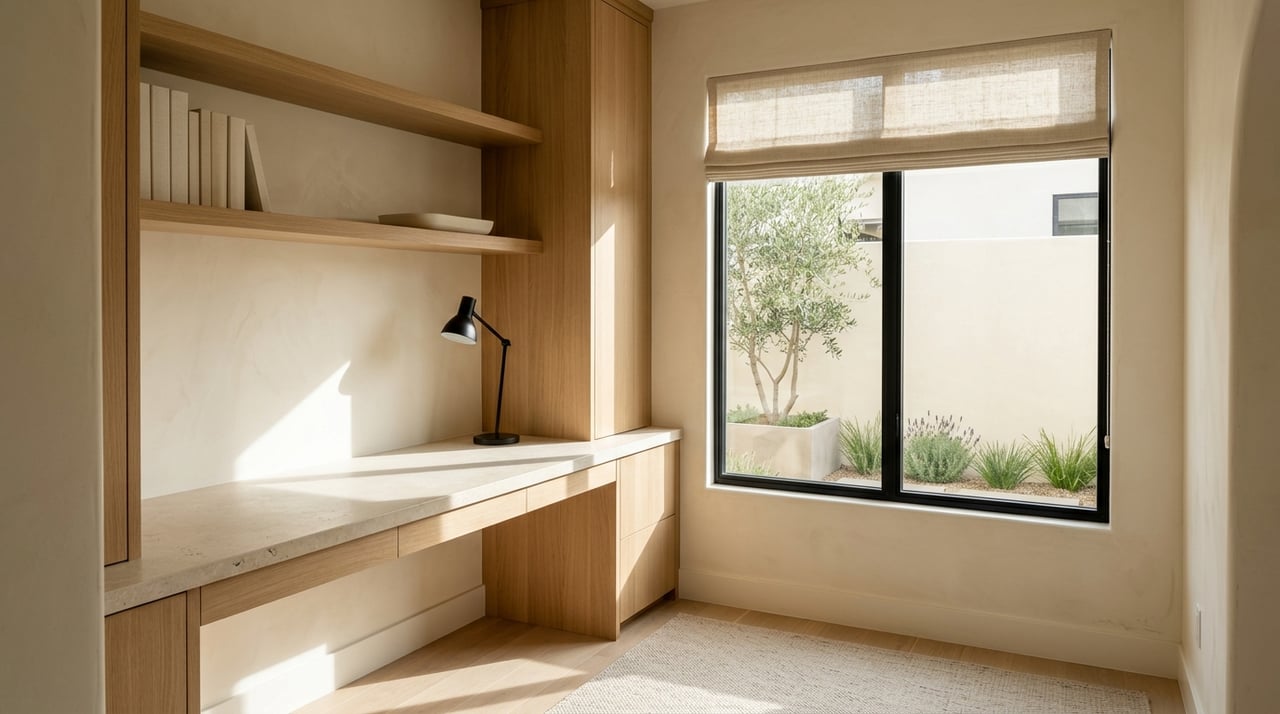
A hybrid schedule often creates new space needs inside the home. You may want a true office, a guest room that can double as a workspace, or a quiet corner that supports video calls and focused work. The goal is not always a bigger house. It is often a smarter one.
NAHB trend reporting shows that buyers are increasingly looking for space for at least one in-home office. The same research also suggests many buyers are willing to make tradeoffs, including choosing a smaller lot or smaller home, to make ownership possible. In a market like Sunnyvale, that can make a well-planned floor plan especially valuable.
Hybrid work tends to blur the line between home and office, so practical features carry more weight. Storage, laundry space, kitchen table space, and a patio or usable yard can make everyday life run more smoothly. These are not flashy features, but they often have a bigger impact on how a home feels Monday through Friday.
NAHB design trend coverage highlights laundry rooms, patios, garage storage, front porches, and kitchen table space as recurring buyer preferences. If you are comparing homes in Sunnyvale, these details may help you think beyond list price and focus on how the home will function over time.
In a hybrid market, location is still important, but the definition has shifted. Instead of planning around a daily freeway commute, you may be weighing how easy it is to get to the office a few times a week while still enjoying your neighborhood the rest of the time. That makes micro-location a bigger part of the decision.
For many buyers, a home near transit, bike routes, or walkable daily conveniences may feel more useful than one that only saves a few minutes on an occasional drive. When office attendance clusters in the middle of the week, convenience on those specific days can have an outsized effect on your routine.
Sunnyvale has strong local and regional transit connections. VTA provides bus, light rail, and paratransit service throughout Santa Clara County and participates in regional rail funding, including Caltrain. The city also identifies the Sunnyvale Caltrain Station, Sunnyvale Transit Center, and bus stops as part of the station area.
That gives hybrid workers several ways to think about commute planning. A home with easier access to Caltrain, bus service, or bike-friendly connections may give you more flexibility on in-office days. If your schedule changes from week to week, that flexibility can become a real quality-of-life benefit.
The small details of a location can matter more than buyers expect. The City of Sunnyvale notes active street-level rail crossings at Mary and Sunnyvale avenues and is pursuing grade separation to improve safety, bicycle and pedestrian pathways, and reduce delay and noise from railroad gates. Those kinds of details can shape how smooth or interrupted your routine feels.
Sunnyvale also emphasizes its bike routes, pedestrian scrambles, HAWK beacons, and Active Transportation Plan focused on a safer, more connected walking and biking network. If you only commute a few days each week, a short bike ride or walk to transit may become one of the most valuable parts of your home search.
If you are comparing areas within the city, localized transit options can make a difference. In Northwest Sunnyvale, Peery Park Rides began operating in February 2025 as a free on-demand transit service. It runs weekdays from 7 a.m. to 7 p.m. within its service area.
That kind of neighborhood-level mobility can make a home more workable for hybrid living. It may not be the only reason you choose one location over another, but it can meaningfully improve how easy office days feel.
When you spend more time at home, outdoor space often becomes more important. That can mean a private patio, a yard, or simply easier access to parks and trails nearby. In a hybrid routine, those spaces are not just nice extras. They can help break up the day and support a healthier rhythm.
Sunnyvale offers a strong local amenity base for that lifestyle. The city says its park system includes 772 acres of parks and open space, along with trails that link parks, schools, creeks, neighboring communities, and the San Francisco Bay Trail. It also highlights 27 parks, a library, an arts complex, and a historic downtown with regular events and a farmers’ market.
A hybrid schedule often means you experience your neighborhood more fully than you would with a traditional commute. You may take a walk between meetings, grab lunch nearby, or use a trail at the end of the workday. Because of that, nearby amenities can affect how supported and balanced your week feels.
NAR’s 2024 buyer data found that quality of the neighborhood ranked highest among neighborhood-choice factors. The same report showed that parks and recreational facilities, walkability, and public transportation all played a role in buyer decisions. In Sunnyvale, access to parks, trails, transit, and community amenities can be a meaningful part of choosing the right home for a hybrid lifestyle.
Most buyers are not searching for a perfect home with unlimited space, the shortest commute, and every lifestyle amenity at once. In Sunnyvale, hybrid work tends to sharpen the tradeoffs. You may be balancing space efficiency, commute efficiency, and outdoor quality of life all at the same time.
That usually means focusing on the features that support your actual week. For one buyer, that may be an extra bedroom and a short bike ride to transit. For another, it may be a townhome with lower maintenance, strong storage, and quick access to parks. The right answer depends on how you live and work, but the decision framework is becoming clearer.
As you evaluate homes in Sunnyvale, it helps to ask practical questions like these:
When you use that lens, it becomes easier to compare homes based on function, not just finishes.
In a market like Sunnyvale, the right home is often about nuance. Two properties with similar price points may live very differently depending on layout, transit access, outdoor usability, and neighborhood context. That is why local insight matters, especially when your priorities go beyond simple commute time.
A thoughtful home search should reflect how you actually use your space now. If you are balancing office days, at-home work, family routines, or long-term flexibility, it helps to have guidance that is practical, organized, and specific to Sunnyvale’s micro-locations.
If you are thinking about buying or selling in Sunnyvale and want help weighing the tradeoffs that matter most for hybrid living, Kim Adams can help you build a smart, local strategy.
Her local expertise, elevated marketing strategies, and concierge‑level service ensure every client feels inspired, supported, and confident, whether buying, selling, or investing.
Kim Adams | CA DRE# 01375840
1133 Minnesota Ave San Jose, CA 95125